Anyone planning new production lines knows the problem: coordination takes time, errors only become apparent during implementation and valuable time is lost. Virtual simulation models, so-called digital twins, fundamentally change this process. This article shows you how modern work planning works in practice, where the biggest time traps are in the project phase and how you can systematically avoid them.
Three key findings
Planning errors are usually not caused by a lack of specialist knowledge, but by a lack of visualisation and fragmented communication between departments.
Virtual models visualise bottlenecks, ergonomic problems and cycle times before real investments are made.
Companies that use digital twins in the project phase reduce correction loops and measurably speed up commissioning.
Why factory projects regularly take longer than planned
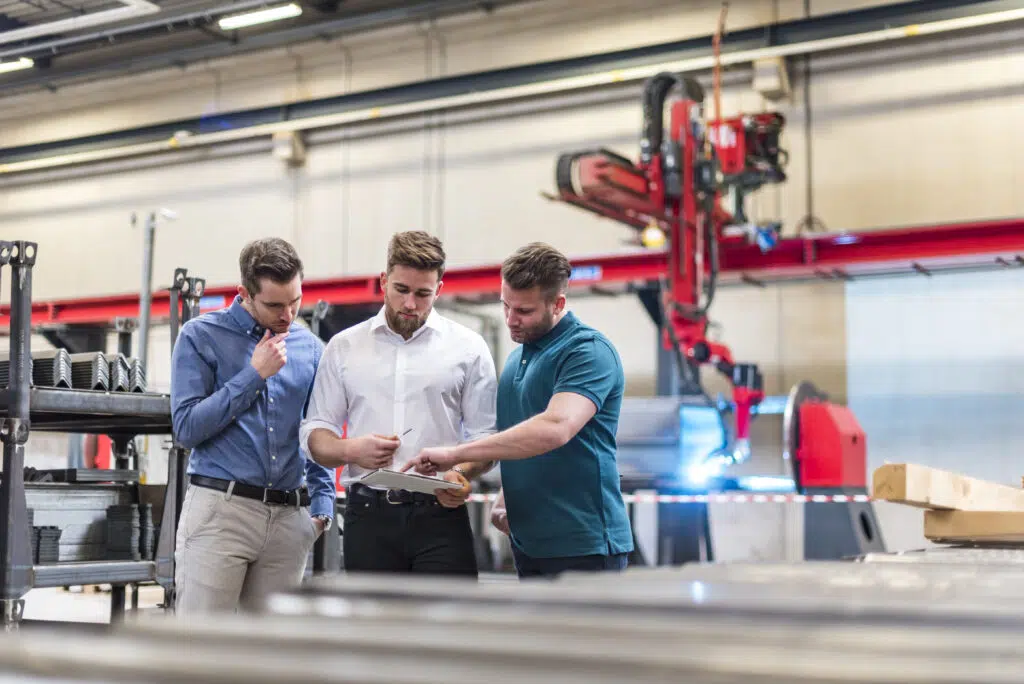
New production line, tight schedule, many departments involved: This constellation is the norm in the manufacturing industry. At the same time, practical experience shows time and again that projects fail not because of a lack of budget or commitment, but because of structural communication problems. Safety managers, the IT department, production management and project management work in separate systems and often literally speak different languages. The result: planning errors only become apparent when machines have already been ordered and construction measures have been initiated. At this point, every correction costs a multiple of what an early simulation would have cost.
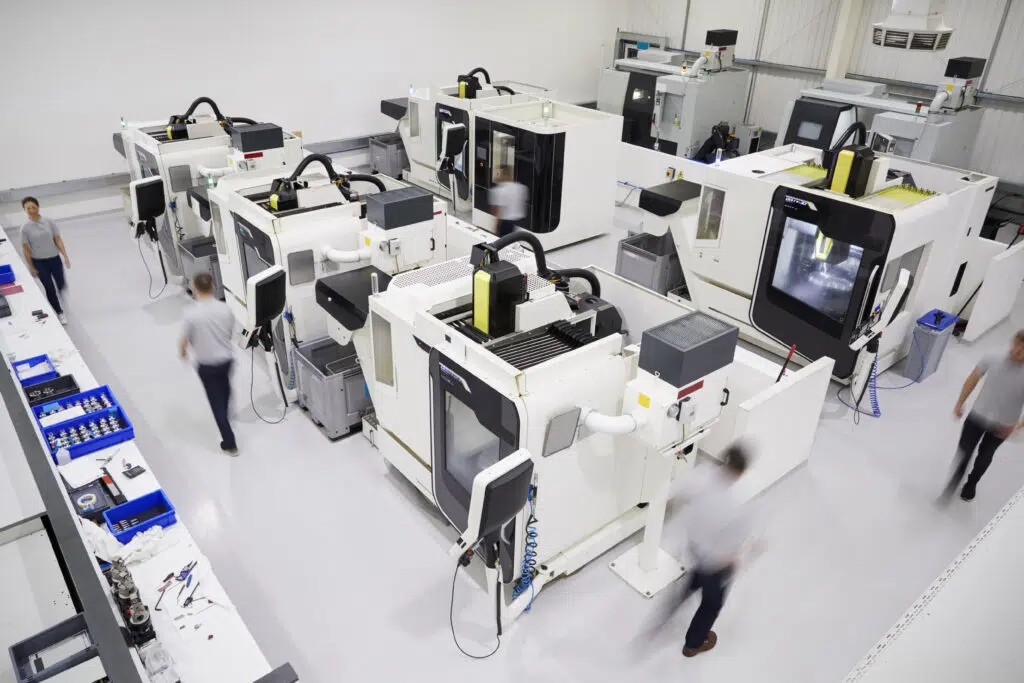
There is also another factor that many people underestimate. Traditional detailed planning of work processes is often based on empirical knowledge and manual time estimates. This knowledge is valuable, but neither objectively comprehensible nor easy to communicate. If an experienced production employee says „it takes about 40 seconds“ based on a gut feeling, there is no reliable data basis to convince a CFO or secure an investment.
What a digital twin really does in practice
Put simply, a digital twin is a virtual image of your production environment. However, the decisive difference to classic production and work planning is not in the visual appearance, but in the ability to act: you can test, change and evaluate processes in the model without touching a single spanner.
In practice, this means that an engineer recognises in the virtual model that a planned workstation forces a biomechanically stressful posture. In reality, this realisation would only have led to sick notes and a redesign after weeks of operation. In the digital twin, the correction takes minutes. The same applies to cycle times: Where rough estimates used to determine the project plan, automated time analyses provide reliable figures for each movement sequence.
Experience from industry shows how valuable this detailed analysis is. The targeted analysis of a single workstation, which was identified as a bottleneck within a production line, led to a measurable reduction in cycle time through virtual optimisation alone. Such improvements add up to considerable economic benefits over shifts and production years.
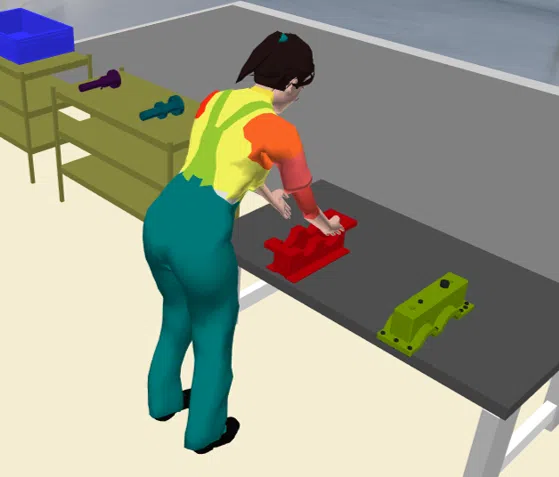
In the digital twin, the correction takes minutes.
Why tuning time often costs more than machine time
In large factory projects, a significant proportion of the total lead time is not spent on construction or procurement, but on meetings, queries and approval loops. Each department requires different information in a different format. The safety manager needs evidence for ergonomic assessment. The CFO needs a clear ROI calculation. The works council wants to understand how the new processes affect working conditions.
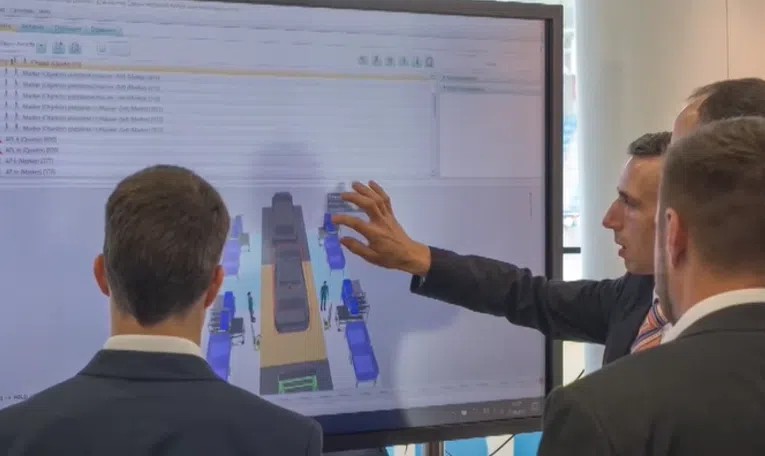
A digital twin addresses this challenge directly by creating a common, visual basis for decision-making. Instead of a long report or an abstract drawing, everyone involved sees the same simulated process. Discussions become more concrete, approvals faster and the risk of misunderstandings is measurably reduced. This advantage can hardly be overestimated, especially for geographically dispersed teams or international projects.
A digital twin creates a common, visual basis for decision-making for everyone involved.
From simulation to commissioning: the ema Software Suite
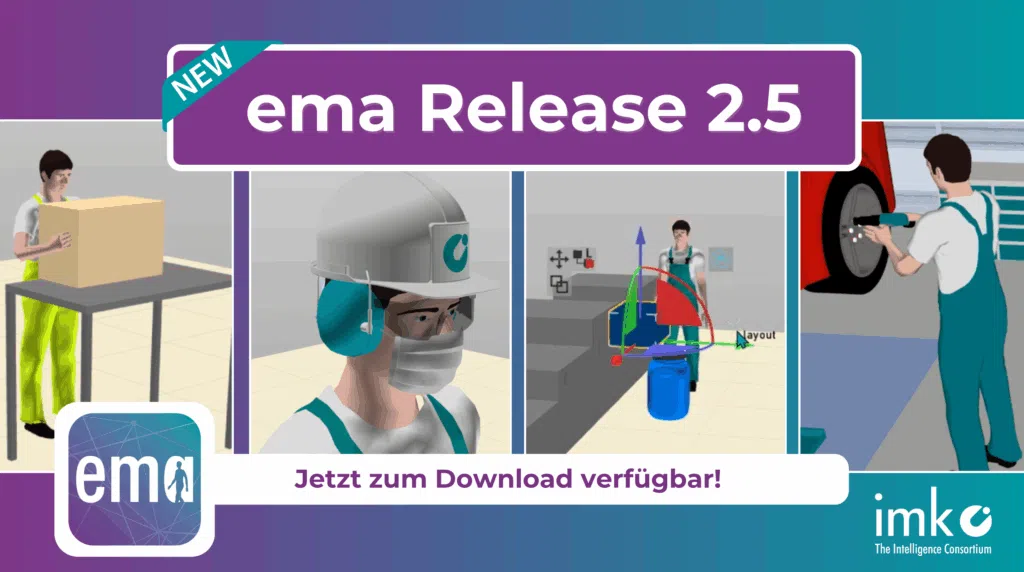
The ema Software Suite was developed precisely for this application. It combines the planning of entire production plants with the detailed analysis of individual workstations in an integrated environment. This means that whether you want to design a new plant or optimise an existing line, the system supports both scenarios on the same database.
The automatic evaluation of ergonomics and production time directly from the simulation is particularly relevant for the daily work of planners and production managers. There is no need to open separate analysis tools or transfer data manually. Seamless integration into existing system landscapes ensures that ema starts where your processes are today and not where an ideal world would like them to be. Companies such as Grammer AG, BMW and Geberit rely on precisely this: transparent, global detailed planning and simulation of workflows on a common platform.
Advantages at a glance
| The challenge in practice | Without a digital twin | With ema Software Suite |
|---|---|---|
| Error detection | Only visible in the implementation phase | Early on in the virtual model |
| Time analysis | Manual estimates without an objective basis | Automatic evaluation from the simulation |
| Stakeholder communication | Fragmented data and reconciliation loops | Common visual basis for decision-making |
| Ergonomics and compliance | Evaluation only after commissioning | Integrated analysis before every investment |
Summary and conclusion
The digital twin is no longer a promise for the future. It is a tangible planning tool that makes the difference between a smooth project completion and months of rework. The crucial question is no longer whether, but when you will switch to virtual simulation and how much planning time you are wasting unnecessarily until then.
This is exactly where the ema Software Suite offers you direct access: tried and tested, can be integrated into existing system landscapes and can be used immediately for your next factory or optimisation job.
See for yourself: How much planning time can you save with ema? Arrange your free demo now and let us show you your specific processes live.
FAQ
What is a digital twin in production?
A digital twin is a virtual, simulatable image of your production environment. It makes it possible to test and evaluate processes, layouts and workstations before real investments are made.
From what company size is it worth using?
Even medium-sized manufacturing companies benefit considerably, especially if production lines have to be regularly adapted, reorganised or evaluated for ergonomics.
How long does the introduction of the ema Software Suite take?
The ema Software Suite is designed to complement, not replace, existing IT landscapes. Integration takes place step by step and accompanies your team with training right from the start.
How do I convince internal decision-makers to invest?
The automatically generated ergonomics and time assessments from the digital twin provide the fact-based foundation that CFOs and production managers need for investment decisions.
Can I use ema for individual workstations without modelling the entire factory?
Yes. ema Software Suite supports both holistic factory planning and the targeted optimisation of individual workstations or bottleneck areas.
Are you convinced?
Then secure your personal, free and non-binding demo now!